Are WSIB Benefits Taxable in Ontario?
If you received WSIB benefits after a workplace injury, you may be wondering whether that money will create a tax bill. The short answer is this: WSIB benefits are generally not taxable income, but many WSIB payments still have to be reported on your tax return. That difference matters because the amount can affect some government credits and benefits, even when you do not pay income tax on the WSIB benefits themselves.
Need help with a WSIB benefits problem? Browse verified WSIB lawyers and paralegals on ClaimIt and choose a representative who can review your situation.
This guide explains how WSIB benefits are treated for tax purposes in Ontario, what to do with a T5007 slip, which benefits are usually tax-free, and when it may be worth speaking with a tax professional or WSIB representative.
Quick Answer: Are WSIB Benefits Taxable?
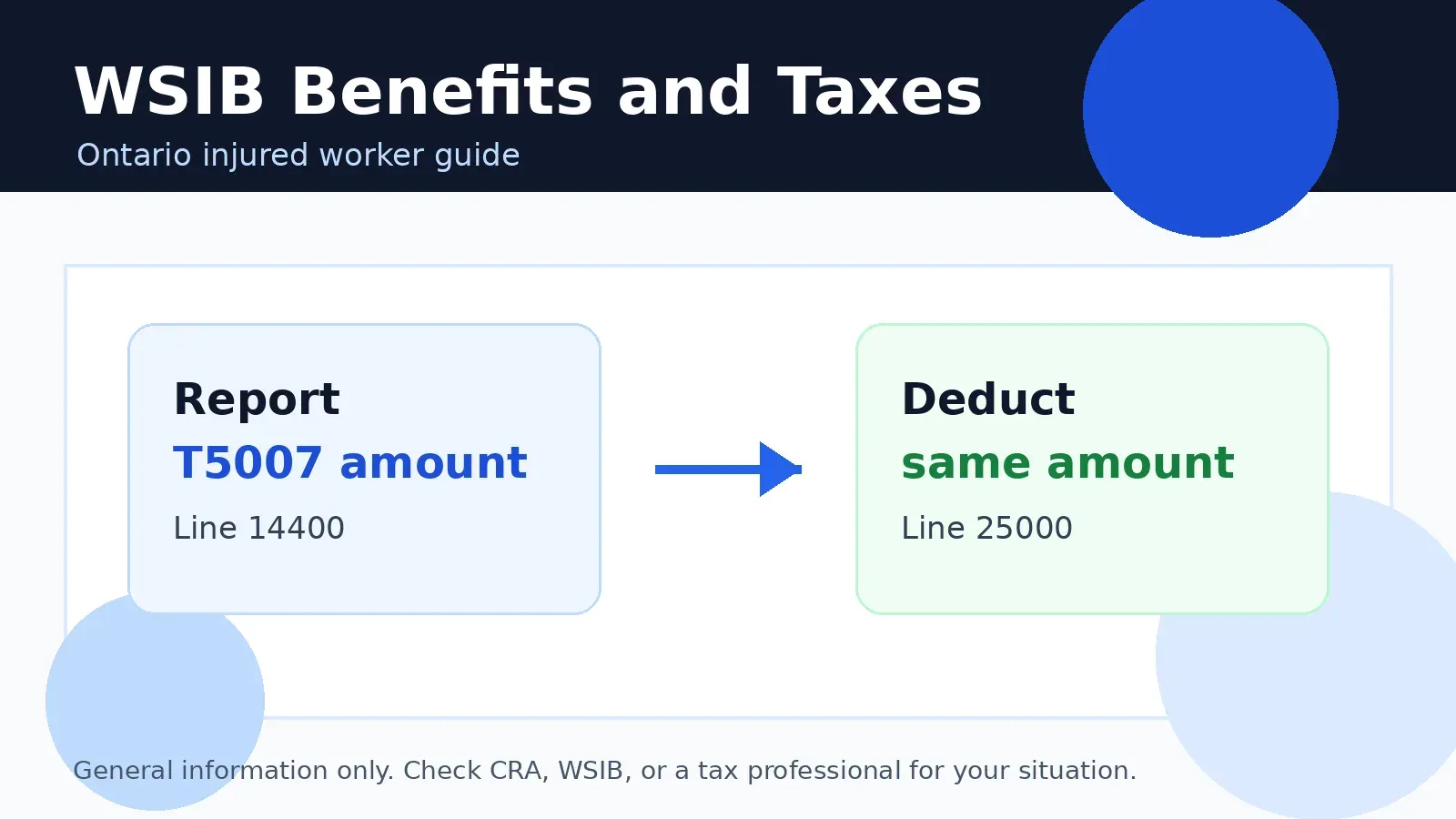
WSIB benefits are not taxed the same way as regular employment income. According to WSIB, the Canada Revenue Agency requires workers to report WSIB benefits as income, but workers do not pay income tax on those WSIB benefits. The CRA explains that workers' compensation benefits are reported on line 14400 and then deducted on line 25000, which removes the amount from taxable income.
In plain language, this usually means:
- You may receive a T5007 slip for WSIB wage loss benefits.
- You report the T5007 amount on your tax return.
- You claim the matching deduction so the benefits are not included in taxable income.
- The amount may still affect income-tested credits or benefits.
This article is general information for Ontario workers. It is not tax advice or legal advice. If your return includes employment income, EI, CPP disability, social assistance, survivor benefits, repayment issues, or a dispute with WSIB, get advice for your exact situation.
Why WSIB Benefits Are Reported If They Are Not Taxable
The reporting rule can feel confusing. Many workers hear that WSIB benefits are not taxable and assume they can ignore the slip. That is risky. The CRA uses the reported amount to calculate other credits and benefits, even though the WSIB benefits are offset by a deduction.
The CRA says workers' compensation benefits shown on a T5007 slip should be entered on line 14400. The same amount is then claimed as a deduction on line 25000. This is the step that subtracts the workers' compensation benefits from taxable income.
That reporting process helps the CRA calculate programs such as:
- GST/HST credit
- Canada Child Benefit
- Old Age Security and Guaranteed Income Supplement
- Some provincial or territorial tax credits
- Some non-refundable tax credits
So, the best way to think about WSIB benefits is: reportable, but generally not taxable. You still need to enter the information properly.
Which WSIB Benefits Are Tax-Free?
WSIB can pay several types of benefits after an allowed workplace injury or illness claim. The tax reporting details depend on the benefit type and your personal situation, but many WSIB benefits are designed to compensate for workplace injury losses rather than act like regular wages.
Loss of Earnings benefits
Loss of Earnings benefits, often called LOE benefits, are paid when a work-related injury or illness causes you to lose wages. WSIB says that if it pays you benefits for lost pay, it sends a T5007 statement at the end of the year. The statement shows the total loss-of-earnings benefits paid up to December 31, minus any interest payments.
You must report the T5007 amount on your income tax return, but the amount is generally deducted so it is not taxable. If you are trying to understand how LOE benefits are calculated, read ClaimIt's guide to WSIB Loss of Earnings benefits in Ontario.
Non-Economic Loss benefits
Non-Economic Loss benefits, often called NEL benefits, may be paid when a workplace injury or illness causes a permanent impairment. NEL benefits are different from wage replacement because they relate to permanent physical or functional loss.
If you receive NEL benefits and are unsure how they should appear on tax documents, check your WSIB letters and slips carefully. You can also ask WSIB, a tax professional, or a WSIB representative to confirm how the payment should be handled.
For more detail on how permanent impairment awards work, read ClaimIt's guide to the WSIB NEL assessment process.
Health care benefits
WSIB health care benefits can cover treatment, prescription drugs, medical devices, equipment, and supplies related to your workplace injury or illness. These benefits are generally not treated like employment income. In many cases, WSIB pays the provider directly or reimburses approved injury-related costs.
Keep records of health care approvals, receipts, and reimbursements. Good records can help if there is a later dispute about what WSIB approved, what was paid, or whether a treatment expense was related to your claim.
Survivor benefits
Survivor benefits may be available to a spouse, dependent children, or other eligible dependants when a worker dies because of a workplace injury or illness. The CRA includes certain survivor benefits in its description of workers' compensation benefits that may appear on a T5007 slip.
Survivor benefit situations can be more complex because they may involve dependants, estates, other income sources, and long-term family support. If you are dealing with a fatal workplace injury claim, consider getting individual tax and WSIB advice.
Families dealing with a fatal workplace injury may also want to review ClaimIt's overview of WSIB survivor benefits and legal help.
Do You Have to Report WSIB Benefits on Your Tax Return?
Yes, if you receive a T5007 slip or your tax package tells you to report workers' compensation benefits, you should report the amount on your tax return. For most workers, the key number is box 10 on the T5007 slip.
The CRA's basic process is:
- Enter the amount from box 10 of your T5007 slip on line 14400.
- Claim the same amount as a deduction on line 25000.
- Keep the T5007 slip with your records. Include it if you file a paper return.
If you use tax software, it may handle the matching deduction automatically after you enter the T5007 slip. Do not assume it did. Review the return summary and make sure the amount is not being taxed as regular income.
If you work with a tax preparer, give them all WSIB documents, including your T5007 slip, WSIB decision letters, repayment letters, and any T4 slips from your employer.
What Is a T5007 Slip?
A T5007 is a Statement of Benefits. It reports certain benefits paid to you in the year, including workers' compensation benefits. WSIB says it mails T5007 statements in January and February for the previous tax year when wage loss benefits were paid because of an injury or illness at work.
Your T5007 may show:
- Total WSIB benefits paid during the year
- Amounts that relate to wage loss benefits
- Repayments or adjustments, depending on the situation
If you did not receive your T5007, check your WSIB online account if you have one, review your mail, and contact WSIB. You should not guess the number if you can get the official slip.
How WSIB Benefits Can Affect Other Government Benefits
Even when WSIB benefits are not taxable, they can still affect income-tested government programs. This is often the part that surprises injured workers.
Because workers' compensation benefits are reported on your return, they may be considered when the government calculates certain credits and benefits. The CRA specifically notes that reporting workers' compensation benefits helps calculate entitlement to programs such as the GST/HST credit, Canada Child Benefit, Old Age Security, Guaranteed Income Supplement, and certain provincial or territorial credits.
That does not mean every worker will lose benefits. It means the WSIB amount may be part of the calculation. The result depends on your family income, dependants, age, marital status, other income, and the specific program rules.
If your main question is payment amount rather than tax reporting, see ClaimIt's guide to how much WSIB pays in Ontario.
If a WSIB decision has reduced or stopped your benefits, ClaimIt can help you compare Ontario WSIB representatives who handle benefit disputes, appeals, and denied claims.
WSIB Benefits and Employment Insurance
Employment Insurance and WSIB benefits can interact in complicated ways. A worker may apply for EI while waiting for a WSIB decision, or may move between programs when their injury, recovery, or work status changes.
Here are common issues to watch for:
- Overlaps: You may need to report WSIB payments to EI or Service Canada if the benefits cover the same period.
- Repayments: If one program paid you while another program later accepted responsibility, there may be repayment or adjustment issues.
- Timing: A delayed WSIB decision can create a tax year mismatch, especially if retroactive benefits are paid later.
- Records: Keep all EI, WSIB, T4E, T5007, and repayment documents together.
If you are receiving EI and WSIB benefits in the same year, do not rely on general articles alone. Ask Service Canada, WSIB, or a tax professional how to report each amount.
WSIB Benefits and CPP Disability
Canada Pension Plan Disability benefits may also interact with WSIB benefits. Some injured workers apply for CPP disability when their injury or illness creates long-term work limits. Others receive CPP disability while still dealing with a WSIB appeal.
The tax treatment is different. CPP disability benefits are generally taxable, while WSIB benefits are generally reported and deducted. If you receive both, your tax return needs to separate them correctly.
There may also be offset rules, repayment issues, or benefit coordination depending on the facts. Keep your CPP disability letters, WSIB letters, and tax slips. If a decision seems wrong, ask for help before missing a deadline.
If WSIB has denied or reduced your wage-loss payments, ClaimIt's guide on how to appeal a WSIB Loss of Earnings decision explains the next steps.
If you are unsure whether a WSIB decision has affected your benefits the right way, start a free ClaimIt intake and connect with a verified representative who can review your case.
Tax Planning Tips for Injured Workers Receiving WSIB
You do not need to become a tax expert, but a few simple habits can prevent problems later.
1. Keep every WSIB document
Save your T5007 slip, decision letters, payment summaries, repayment notices, and health care reimbursement records. If you appeal a WSIB decision, these documents can also help your representative understand the timeline.
2. Compare your slips to your actual payments
Check whether the amount on your T5007 matches what WSIB says it paid for the year. If something looks wrong, contact WSIB before filing if possible. If you discover the problem after filing, ask how to correct your return.
3. Watch for employer repayment situations
Sometimes an employer pays wages while a worker is off, and the worker later receives WSIB benefits that must be repaid to the employer. The CRA gives specific guidance for situations where a T4 includes employment income and the worker also receives a T5007. These situations can be easy to report incorrectly, so consider tax help.
4. Do not ignore retroactive payments
Retroactive WSIB payments can create confusion because the payment may arrive in one year but relate to an earlier period. Keep the decision letter that explains what the payment covers. Ask a tax professional if the amount is large or if it affects other benefits.
5. File on time even if your WSIB claim is in dispute
A WSIB appeal can take time. If you are waiting for a decision, do not miss tax filing deadlines. Use the slips and information available to you, and ask how to amend your return if WSIB later changes the amount.
When to Get Professional Help With WSIB and Taxes
Many workers can enter a T5007 slip in tax software without issue. But some situations deserve extra help.
Consider speaking with a tax professional if:
- You received WSIB benefits and employment income from the same employer for the same period.
- You repaid WSIB benefits or repaid your employer.
- You received a large retroactive WSIB payment.
- You also received EI, CPP disability, social assistance, or survivor benefits.
- Your credits or benefits dropped after you reported WSIB benefits.
- Your T5007 looks wrong.
Consider speaking with a WSIB lawyer or paralegal if:
- WSIB denied your claim.
- WSIB stopped or reduced your LOE benefits.
- You disagree with a NEL assessment.
- Your employer is disputing your claim.
- You have an appeal deadline coming up.
Tax professionals and WSIB representatives do different jobs. A tax professional helps report the income correctly. A WSIB representative helps with entitlement, appeals, evidence, deadlines, and disputes with WSIB.
If you are starting from a denial letter, read ClaimIt's guide on what to do when a WSIB claim is denied before the objection deadline passes.
Common Mistakes to Avoid
When money is tight and paperwork is stressful, it is easy to make mistakes. Try to avoid these common ones:
- Ignoring the T5007 slip: Not taxable does not mean not reportable.
- Reporting WSIB as regular wages: Workers' compensation benefits should not be treated the same as normal employment income.
- Missing the offsetting deduction: Line 25000 is what removes the reported amount from taxable income.
- Forgetting about other benefits: WSIB benefits can affect some income-tested credits and benefits.
- Throwing away letters: WSIB decisions, payment letters, and tax slips are important if you need to correct a return or appeal a decision.
FAQ: WSIB Benefits and Taxes
Are WSIB benefits taxable income?
WSIB benefits are generally not taxable income, but they may still need to be reported on your tax return. Workers' compensation benefits on a T5007 are reported on line 14400 and deducted on line 25000.
Do I pay tax on WSIB Loss of Earnings benefits?
WSIB Loss of Earnings benefits are usually reported but not taxed. WSIB says it sends a T5007 if you receive benefits for lost pay, and the CRA requires the amount to be reported.
Where do I enter WSIB benefits on my tax return?
Enter the T5007 box 10 amount on line 14400. Then claim the same amount as a deduction on line 25000 so it is removed from taxable income.
Can WSIB benefits reduce my GST/HST credit or Canada Child Benefit?
They can affect some income-tested credits and benefits because the amount is reported on your tax return. The actual effect depends on your full household income and program rules.
What if I never received my T5007 slip?
Contact WSIB and check your online account if you have one. Do not guess the amount if you can get the official slip.
Should I get a WSIB lawyer or paralegal for tax questions?
For tax filing questions, speak with a tax professional. For WSIB entitlement, denied claims, reduced benefits, or appeals, a WSIB lawyer or paralegal may be able to help.
The Bottom Line for Ontario Injured Workers
WSIB benefits are usually not taxable, but many are still reportable. If you receive a T5007 slip, report the amount on line 14400 and make sure the matching deduction appears on line 25000. Keep your WSIB records, watch for interactions with EI or CPP disability, and get help if your situation includes repayments, retroactive benefits, or a WSIB dispute.
If your concern is not just taxes, but whether WSIB is paying the right amount or treating your claim fairly, you do not have to figure it out alone. Use ClaimIt to compare verified Ontario WSIB lawyers and paralegals, then choose the representative you want to contact.
Need Help With Your WSIB Claim?
Connect with a verified WSIB lawyer or paralegal in Ontario. Most offer free consultations and work on contingency.
Find a Representative