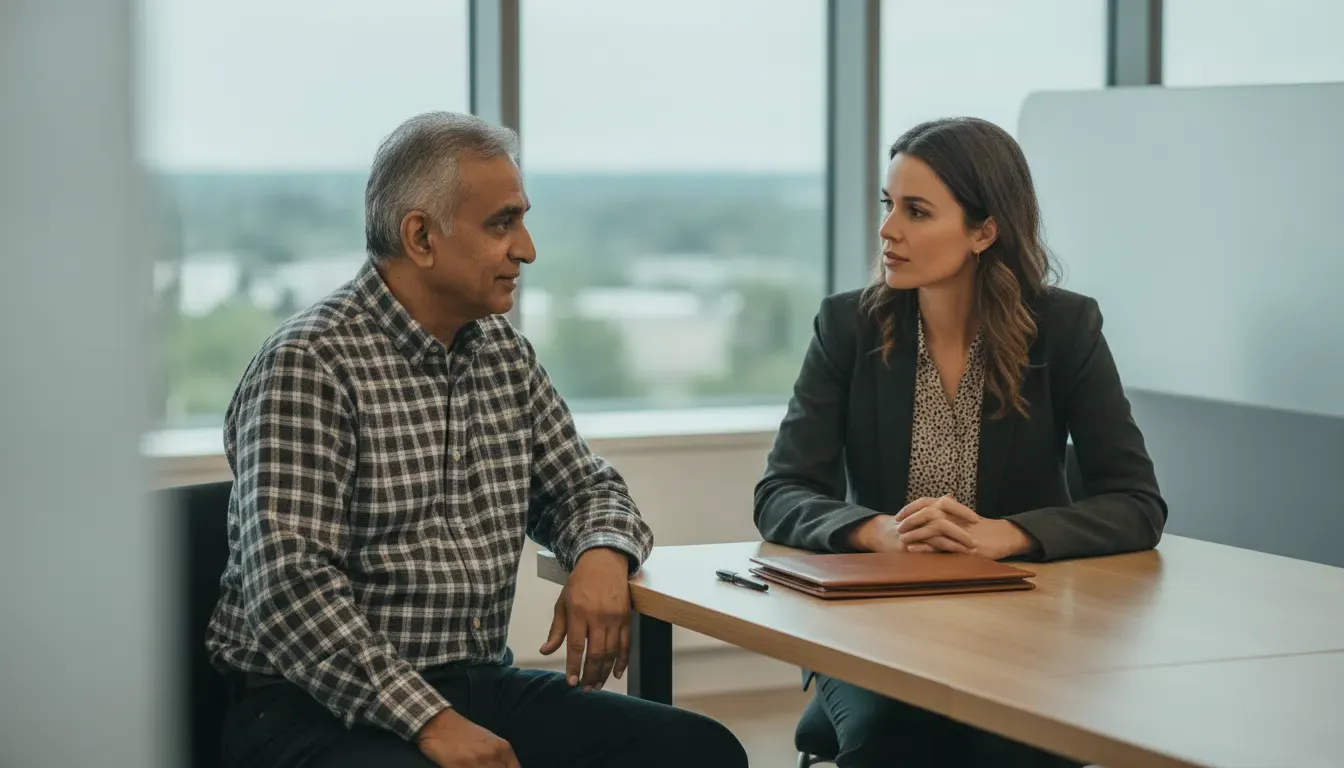
WSIB Lawyers for Secondary Claims in Ontario

A new symptom does not always mean a completely separate WSIB matter. If a later physical or psychological condition may have developed because of an earlier workplace injury, disease, or its treatment, the connection can be important, but it is not automatic. The details of your original injury, work activities, medical history, and the timing of your symptoms may all matter.
Start the intake process to connect with a WSIB representative.
WSIB lawyers for secondary claims can help you organize the medical records, work history, and timeline used to explain a possible connection between the earlier injury and the later condition. WSIB lawyers and paralegals may also help you understand what information to raise with the Workplace Safety and Insurance Board, without guaranteeing that the claim will be accepted.
Before deciding what kind of help you need, it is useful to understand what WSIB means by a secondary condition and how it differs from a new accident or a treatment-related event.
What Is a Secondary WSIB Claim?
A secondary WSIB claim concerns a physical or psychological condition that develops because of a work-related injury, disease, impairment, or treatment. The important question is whether the later condition is causally connected to the original work-related problem. WSIB reviews the facts; a later diagnosis is not automatically accepted as a secondary condition.
In Ontario, the Workplace Safety and Insurance Board (WSIB) recognizes secondary conditions as a distinct policy category. Its guidance addresses conditions resulting from a work-related disability or impairment, accidents resulting from treatment, and non-work-related second accidents. These categories can involve different facts, so describing what happened in sequence matters.
WSIB policy says a secondary condition may be physical or psychological and may arise from a work-related injury, disease, or treatment. It also states that benefits may be available where a secondary condition is causally linked to the work-related injury, including further aggravation of an impairment or a new injury. That wording describes the policy framework, not a decision about any individual worker's entitlement. See the WSIB policy on secondary conditions and the policy on resulting work-related disability or impairment.
A second accident is not automatically a secondary claim. WSIB policy says the work-related impairment must be established as causing the second accident. This is different from an accident that occurs during treatment or a condition that develops after the original injury. The circumstances, medical information, and connection between events all matter.
For that reason, someone searching for WSIB lawyers for secondary claims may want help presenting the timeline and supporting records without assuming the result. A useful starting point is to review the evidence in a WSIB claim. ClaimIt is a matching platform, not a law firm or WSIB decision-maker. Workers can also browse WSIB lawyers and paralegals who may be familiar with Ontario workplace-claim issues.
How Can a Later Condition Be Connected to an Earlier Workplace Injury?
Answer: A later physical or psychological condition may be connected to an earlier workplace injury when the available medical and factual evidence shows a causal relationship. The connection is not automatic. WSIB considers the nature of the original injury, how the later condition developed, treatment history, and other possible explanations before deciding entitlement.
A useful starting point is the timeline. Record the original injury or diagnosis, changes in symptoms, work duties, treatment, and the date you first noticed the later problem. A date-ordered account can help show whether the condition followed a continuing impairment, a change in how you moved or worked, or another event. It can also identify gaps that need clarification from a health professional.

Under the WSIB policy on resulting work-related disability or impairment, secondary conditions can include physical or psychological conditions arising from a work-related injury, disease, or treatment. The policy states that benefits may apply where a secondary condition is causally linked to the work-related injury. In practical terms, the question is not simply whether the later condition appeared after the first one. The question is whether the first injury materially caused or contributed to the later condition.
Medical assessment may help establish a diagnosis, while clinical notes can explain the mechanism of the connection. Work records, descriptions of duties, and a consistent symptom history may provide additional context. If the later condition followed a separate accident, the causal issue can be especially important. WSIB policy says benefits for a second accident depend on establishing that the work-related impairment caused it.
Because the analysis is fact-specific, avoid assuming that every new symptom is covered or unrelated. If you need help reviewing the medical history, timeline, and work records, you can find WSIB lawyers and paralegals in Ontario. ClaimIt is a matching platform, not the decision-maker on your claim.
What Should You Document Before Seeking Help?
Answer: Start with a dated record of your work duties, when symptoms appeared or changed, when you reported them, and what medical care followed. Keep related work and health records together. This evidence can help a WSIB lawyer or paralegal understand the possible connection, but it does not decide whether WSIB will accept the claim.
Build a date-ordered timeline:
Write down the earlier workplace injury or condition, the work you were doing at the time, and the point when the later symptoms first appeared. Include changes in pain, movement, strength, sleep, or ability to work. If symptoms developed gradually, note when they became noticeable and when they affected particular tasks. A clear timeline is often more useful than trying to remember events during a stressful appointment.
Describe your duties and reporting:
Record the physical demands, repeated movements, lifting, positions, tools, schedule, and any modified duties involved. Note who you told about the symptoms, when you reported them, and what response you received. Save messages, incident reports, accommodation records, and notes about missed or changed shifts. For background on organizing work-related condition claims, compare your notes with the issues that can arise when a condition develops over time.
Gather medical and work records:
Keep appointment dates, referrals, test results, diagnoses, treatment plans, restrictions, and information about what you told each provider. Work schedules, job descriptions, pay records, modified-duty plans, and attendance records may also help show how the condition affected your work. Do not edit medical records or guess at a diagnosis. Ask a provider to explain the diagnosis and work restrictions in the clinical record.
Check reporting information carefully:
Do not assume that one reporting deadline applies to every secondary-condition situation. Confirm the current requirements directly with the Workplace Safety and Insurance Board and consider getting advice about your circumstances promptly. If an earlier condition or health issue is part of the history, you may also want to review information about pre-existing condition and WSIB coverage.
Comparing Secondary Conditions, Treatment Accidents, and Separate Accidents
Answer: WSIB may assess a later condition differently depending on whether it followed the original impairment, resulted from treatment or directed travel, or occurred as a separate accident. The key issue is usually the connection between the earlier work-related condition and what happened next. This table is a reading aid, not an entitlement decision. The Workplace Safety and Insurance Board reviews the facts of each case under its policies.
| Situation | What the WSIB policy examines | Useful records |
|---|---|---|
| Secondary physical or psychological condition arising from a work-related injury, disease, or impairment. | Whether the later condition is causally linked to the original work-related condition, including whether it represents further aggravation or a new injury. | Medical assessments, earlier and later clinical records, symptom history, work-duty information, and a date-ordered timeline. |
| Accident resulting from treatment for a work-related condition. | Whether the second accident resulted from treatment, whether it was a treatment complication, or whether it happened during travel specifically directed by the WSIB. Travel arrangements may also matter. | Treatment notes, appointment details, travel directions, arranged transportation records, incident reports, and witness information. |
| Non-work-related second accident. | Whether the established work-related impairment caused the second accident. A separate event is not automatically connected simply because the worker had an earlier WSIB claim. | Accident report, medical records from before and after the event, witness accounts, equipment or mobility records, and evidence explaining the impairment's role. |
The WSIB policy recognizes secondary conditions and separately identifies conditions resulting from work-related impairment, accidents resulting from treatment, and non-work-related second accidents. It also states that benefits for a second accident depend on establishing that the work-related impairment caused it. Read the WSIB secondary-conditions policy and the related treatment-accidents policy for the policy framework.
Because the distinctions can be difficult to apply, some workers choose to find a WSIB lawyer or paralegal who can review the timeline and records. ClaimIt is a matching platform, not the decision-maker on entitlement.
When Should You Contact WSIB Lawyers for Secondary Claims?
If a later physical or psychological condition seems connected to an earlier workplace injury, speaking with a representative may help you understand what information matters before you take your next step. WSIB lawyers and paralegals can review the history you provide, including what happened, when symptoms changed, and how the later condition affects you. That review does not guarantee that WSIB will accept the claim. Whether a secondary claim is allowed depends on the facts and the decision-making process.
Consider seeking guidance when:
- Your symptoms have changed, returned, or expanded after an earlier work-related injury, and you are unsure how the later problem fits with your existing claim.
- You have received different explanations about whether the condition is connected to the original injury, treatment, or another event.
- You are being asked for information you find difficult to organize, such as medical records, work history, claim correspondence, or a clear timeline.
- You are concerned that an important detail about the later condition has not been considered, or you do not understand what WSIB is asking you to provide.
It can also be sensible to ask questions early, before assumptions harden around the file. Bring the claim number, relevant letters, medical information, and a simple chronology of symptoms and appointments if you have them. Be clear about what you know and what remains uncertain. A representative may explain possible options, but only WSIB can decide entitlement.
Browse WSIB lawyers and paralegals in Ontario to compare representatives for your situation.
ClaimIt is a matching platform, not a law firm or decision-maker. It does not decide whether a claim is allowed. The platform connects injured Ontario workers with verified WSIB lawyers and paralegals across the province. If you find a representative who seems appropriate, you can start the intake process and share the information needed for a potential connection.
How Can a WSIB Lawyer or Paralegal Help?
A WSIB lawyer or paralegal may help you organize the evidence and assess the timeline connecting a later condition to an earlier workplace injury. They may also explain process options and communicate with you about what information is still needed. Their role is to review the facts of your situation, not to guarantee that WSIB will accept the claim.
A secondary-condition issue can involve more than the date of the original accident. A representative may help you put your work duties, symptom onset, reporting, treatment, and medical visits into a clear, date-ordered timeline. That structure can make it easier to identify unanswered questions and distinguish what you know from what still needs medical or workplace documentation.
They may also review relevant medical records and work records, then explain how those materials could relate to the claimed connection. This may include discussing whether the later physical or psychological condition appears connected to the earlier injury, disease, or treatment. The WSIB claim investigation guide offers further context on organizing evidence. Any conclusion about entitlement remains fact-specific and belongs to the Workplace Safety and Insurance Board.
What Communication Can Look Like
Depending on the arrangement you make with a representative, they may help clarify questions from WSIB, prepare information for a claim review, or explain what may happen next if the connection is questioned. They can also help you understand the difference between a request for more evidence, a decision about the secondary condition, and a separate appeal issue. Ask what they will review, what information they need from you, and how they will communicate updates.
ClaimIt is a matching platform, not a law firm or decision-maker. You can browse WSIB lawyers and paralegals in Ontario, choose a representative, and then start the intake process. A representative can explain your options for your circumstances, while WSIB makes the claim decision.
What If the Secondary Claim Is Questioned or Denied?
If WSIB questions or denies the connection between a later condition and an earlier workplace injury, ask for the reasons in writing and preserve the records that explain the connection. A clear timeline, medical information, and case-specific guidance from a qualified WSIB lawyer or paralegal can help you understand what to do next.
A questioned claim is not necessarily a final answer about every part of your situation. The Workplace Safety and Insurance Board may be examining whether the later condition is related to the earlier injury, whether another cause better explains it, or whether the available medical information is incomplete. WSIB policy describes secondary conditions as potentially involving a physical or psychological condition connected to a work-related injury, disease, or treatment, but the connection remains fact-specific.
Start by identifying the decision and its reasons
Keep the decision letter, notices, medical reports, employer communications, and notes about conversations with WSIB together. Read the stated reason carefully. For example, the issue may involve causation, a pre-existing condition, the timing of symptoms, or the distinction between a secondary condition and a separate accident. Do not assume that a general explanation of a denied claim answers the specific issue in your file.
A date-ordered record can make gaps easier to spot. Note when the original injury happened, how treatment progressed, when the later symptoms appeared, what changed in your work or daily activities, and which health professionals assessed you. Medical assessment may help establish the diagnosis, while work records and a clear history may help explain the claimed work connection. You can also review guidance on responding to a denied WSIB claim, while keeping your circumstances separate from general examples.
Ask focused questions before deciding on next steps
Ask WSIB what evidence or explanation was missing, which condition was considered, and whether the decision concerns the original injury, the later condition, or both. A representative can review the decision and help you understand whether further medical clarification, records, or a formal review may be relevant. This is different from guaranteeing that an appeal will succeed. If a formal appeal is the issue, you can find help with a WSIB appeal from an Ontario representative.
Start the intake process to share your situation with a WSIB lawyer or paralegal who may be able to provide case-specific guidance.
Connect with a WSIB lawyer or paralegal about your secondary claim.
Frequently Asked Questions
A later condition is not automatically accepted as related to an earlier workplace injury. The connection may depend on the medical history, timing, work duties, treatment, and other evidence. WSIB lawyers and paralegals can help you organize those details, but the Workplace Safety and Insurance Board makes the entitlement decision.
How do I show that a later condition is connected to my workplace injury?
Keep a dated timeline of your original injury, symptoms, work duties, medical visits, treatment, and when the later condition appeared. Medical assessment can help establish a diagnosis, while work records and a clear history may help explain the claimed connection. See the WSIB policy on resulting impairment.
Can a secondary condition be physical or psychological?
Yes. WSIB policy addresses potentially secondary physical and psychological conditions arising from a work-related injury, disease, or treatment. Whether a particular condition qualifies depends on the facts and evidence in that case, including whether a causal link is established.
What should I do if WSIB questions or denies the connection?
Read the decision carefully, gather the medical records and timeline that address the disputed connection, and check any applicable response or review instructions. A WSIB lawyer or paralegal can review your records and explain possible next steps without guaranteeing an outcome.
How can I find representation for a secondary claim in Ontario?
You can browse WSIB lawyers and paralegals in Ontario, choose a representative, and then start the intake process. ClaimIt is a matching platform, not a law firm, and does not decide whether a claim will be allowed.
Ready to Explore Your Next Step?
A later condition can raise questions about how your earlier workplace injury, treatment, and current symptoms fit together. If you want to discuss your situation with a representative, you can browse verified WSIB lawyers and paralegals in Ontario, choose someone who may be a suitable fit, and continue through the intake process. ClaimIt helps you find representatives; the representative can explain your options.
Start the intake process to share your secondary-claim questions.
Need Help With Your WSIB Claim?
Connect with a verified WSIB lawyer or paralegal in Ontario. Most offer free consultations and work on contingency.
Find a Representative