WSIB Appeal Process After a Denied Claim
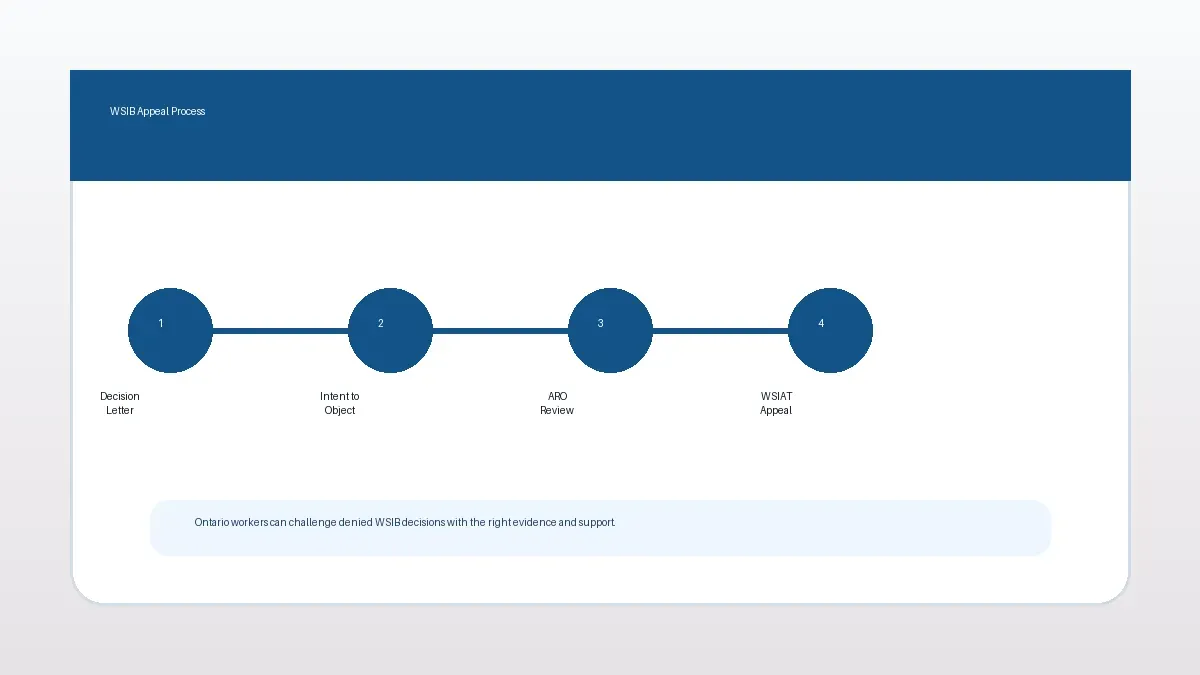
If WSIB denied your claim, reduced your benefits, or ended your loss-of-earnings payments, you still have options. The WSIB appeal process gives injured workers in Ontario a formal way to challenge a decision, submit stronger evidence, and ask for a new review.
Need help with a denied claim? Compare verified WSIB lawyers and paralegals in Ontario through ClaimIt.
This guide explains how the appeal process works, what deadlines matter, what evidence can strengthen your case, and when it may be worth speaking with a WSIB lawyer or paralegal. It is general information, not legal advice, but it can help you understand the path ahead.
Quick Answer: How Does the WSIB Appeal Process Work?
The WSIB appeal process usually has two main levels. First, you object to the WSIB decision and ask for an internal review through the WSIB Appeals Services Division. This is often called an Appeals Resolution Officer review, or ARO review. If you disagree with the ARO decision, you may be able to appeal to the Workplace Safety and Insurance Appeals Tribunal, known as WSIAT.
In most cases, the process looks like this:
- Read the WSIB decision letter and confirm the appeal deadline.
- Submit an Intent to Object form before the deadline.
- Collect medical, employment, wage, and incident evidence.
- Complete the readiness form when you are prepared to move forward.
- Participate in the ARO review, which may be in writing or by hearing.
- If needed, appeal the final WSIB appeal decision to WSIAT.
Understanding Your WSIB Appeal Options
WSIB decisions can affect many parts of a workplace injury claim. You may need to appeal if WSIB says your injury is not work-related, your employer has suitable work available, your wage-loss benefits should stop, or a medical treatment is not covered.
Common appeal issues include:
- Initial claim denial
- Loss-of-earnings benefit denial or reduction
- Health care treatment denial
- Non-economic loss assessment disputes
- Return-to-work and accommodation disputes
- Psychological injury or chronic pain claim disputes
- Survivor benefit or fatal claim disputes
If you are still at the early stage after a denial, you may also find our guide on what to do after a WSIB claim is denied helpful. This article focuses on the formal appeal steps that come after you decide to challenge the decision.
Step 1: Read the Decision Letter Carefully
Your WSIB decision letter is the starting point. Do not skim it. The letter should explain what WSIB decided, the reasons for the decision, and the deadline to object.
Look for three details right away:
- The issue being decided: Is WSIB denying the whole claim, a specific benefit, a treatment plan, or a return-to-work issue?
- The reason: Did WSIB say there is not enough medical evidence, no connection to work, late reporting, a pre-existing condition, or suitable work available?
- The deadline: WSIB appeal deadlines are strict. Missing one can make your case much harder.
Step 2: Submit Your Intent to Object
To start most WSIB appeals, you must submit an Intent to Object form. This tells WSIB that you disagree with the decision and want to preserve your right to appeal.
The Intent to Object form is important because it protects the deadline, but it is not the whole appeal. You do not need to have every medical report ready before filing it. If the deadline is close, submitting the form on time may be the priority.
On the form, explain which decision you disagree with and why. Be clear and specific. For example, instead of writing "WSIB is wrong," explain that your doctor supports time off work, your job duties caused the injury, or your employer's modified work was outside your restrictions.
The WSIB appeals page explains the appeal process and forms. Use the official WSIB instructions for filing requirements, and keep proof that you submitted your documents.
WSIB Appeal Deadlines You Cannot Miss
Deadlines are one of the most important parts of the WSIB appeal process. The deadline can depend on the type of decision. Some decisions have shorter time limits than others. Always check the date and deadline listed in your decision letter.
As a general rule, many WSIB decisions must be objected to within months, not years. Return-to-work and labour-market-related decisions may have shorter timelines than other benefit decisions. If you are unsure, act quickly and get advice before the deadline passes.
Late appeals can sometimes be considered, but you should not rely on that. WSIB may ask why the objection was late, what caused the delay, and whether there is a reasonable explanation. It is safer to file the Intent to Object on time, even if you still need to gather evidence.
Tip: Put the deadline in your phone calendar, write it on the decision letter, and set reminders for two weeks and one week before it expires.
Step 3: Build the Evidence for Your Appeal
A WSIB appeal is not only about saying the decision feels unfair. You need evidence that answers the reason WSIB denied or limited your claim.
Strong appeal evidence may include:
- Medical records: Emergency room notes, family doctor notes, specialist reports, imaging results, therapy notes, and medication records.
- Functional restrictions: Written limits from your doctor about lifting, standing, bending, sitting, driving, repetitive work, or hours.
- Workplace evidence: Incident reports, witness statements, job descriptions, photos, emails, shift schedules, and modified work offers.
- Wage records: Pay stubs, T4s, employment records, overtime history, and proof of missed work.
- Timeline notes: A simple dated timeline showing the injury, reporting, treatment, WSIB calls, return-to-work attempts, and symptoms.
For appeals about loss-of-earnings benefits, read our guide on how to appeal WSIB loss-of-earnings decisions.
Step 4: Complete the Readiness Form
After filing an Intent to Object, WSIB may send or require a readiness form before the appeal moves forward. This step signals that you are ready for an Appeals Resolution Officer to review the file.
Do not rush this step if key evidence is missing. Once the appeal moves ahead, you want the strongest possible record in front of the decision-maker. Review the claim file, compare WSIB's reasons with your evidence, and make sure important documents have been submitted. If organizing the package feels overwhelming, ClaimIt's free intake form can connect you with a WSIB-focused representative who can assess what is missing.
A readiness package often includes your written arguments, medical evidence, workplace documents, and any other information that supports your position. If you are working with a representative, they can help organize the file and frame the legal and medical issues.
Step 5: Internal Review by an Appeals Resolution Officer
The internal WSIB appeal is reviewed by an Appeals Resolution Officer, often called an ARO. The ARO looks at the file, the decision under appeal, the evidence, and the arguments from each side.
Some appeals are decided in writing. Others may involve an oral hearing. A written review can be faster and may work for issues that are mostly about documents. A hearing may be more useful when credibility, detailed job duties, or disputed facts matter.
At this stage, the ARO can confirm the original decision, change it, or send issues back for further action. If the ARO decision is favourable, WSIB should apply the result to your claim. If it is not favourable, you may need to consider a WSIAT appeal.
Step 6: Appealing to WSIAT
WSIAT is separate from WSIB. It hears appeals from final WSIB appeal decisions. For many injured workers, WSIAT is the last formal appeal level.
The WSIAT appeal steps include filing the appeal, receiving a case record, preparing submissions, and attending a hearing if one is scheduled. WSIAT hearings can involve sworn evidence, questions from the Vice-Chair or panel, documents, witnesses, and legal arguments.
WSIAT appeals can be more formal than the internal WSIB process. The issues are often narrower, the record matters, and the decision can have long-term consequences for wage-loss benefits, health care, and future entitlement.
If your appeal is moving to WSIAT, it may be time to speak with someone who handles these cases often. ClaimIt has a dedicated guide on finding a WSIAT appeal paralegal in Ontario, and our WSIAT appeal timeline guide explains what to expect after filing.
Do You Need a Lawyer or Paralegal for a WSIB Appeal?
You are allowed to handle a WSIB appeal yourself. Some workers do. But many appeals involve medical causation, WSIB policy, return-to-work rules, wage calculations, and tribunal procedure. Those issues can be difficult when you are also injured, stressed, and trying to pay bills.
A WSIB lawyer or paralegal may help by:
- Reviewing the decision and identifying the real issue under appeal
- Requesting and organizing your WSIB claim file
- Finding gaps in medical or workplace evidence
- Preparing written submissions
- Questioning witnesses at a hearing
- Explaining risks, timelines, and possible outcomes
Want to compare options before choosing representation? Compare WSIB lawyers in Ontario, compare WSIB paralegals in Ontario, or browse all verified representatives on ClaimIt.
What Are the Chances of Winning a WSIB Appeal?
There is no single success rate that applies to every WSIB appeal. Your chances depend on the issue, the evidence, the medical support, the claim history, the policy rules, and how clearly your case is presented.
Appeals are usually stronger when:
- The medical evidence directly answers WSIB's reason for denial.
- The timeline between injury, reporting, treatment, and lost work is clear.
- Your job duties are described in detail, not in vague terms.
- Witnesses or documents support what happened at work.
- Your arguments focus on WSIB policy and the evidence, not only frustration.
Common Mistakes That Can Hurt a WSIB Appeal
Injured workers often make mistakes because the system is confusing, not because they are careless. Avoid these common problems:
- Missing the appeal deadline: File the Intent to Object on time.
- Sending too little evidence: Match your evidence to the reason WSIB gave for denial.
- Ignoring the claim file: Review what WSIB already has and what it is missing.
- Using emotional arguments only: Explain the facts, documents, and policy reasons.
- Returning to unsafe work without documentation: Tell your doctor about restrictions and keep records of problems.
- Waiting until WSIAT to get organized: The internal appeal record can shape what happens later.
How Long Does a WSIB Appeal Take?
Timelines vary. A simple internal review may move faster than a complex appeal that needs medical reports, file disclosure, submissions, and a hearing. WSIAT appeals can take longer, especially if the case record is large or a hearing must be scheduled.
While you wait, keep going to medical appointments, follow treatment plans, keep copies of all WSIB communication, and update your representative about changes in work, income, or health. New developments may affect the appeal or a related benefit issue.
If your benefits have stopped and you are under financial pressure, tell your representative or community legal clinic right away. There may be other steps to consider while the appeal is pending.
FAQ: WSIB Appeals in Ontario
Can I appeal a WSIB decision myself?
Yes. You can appeal a WSIB decision on your own. However, many workers choose a lawyer or paralegal when the case involves medical evidence, return-to-work disputes, WSIAT, or significant wage-loss benefits.
What is the first form for a WSIB appeal?
In many cases, the first key form is the Intent to Object form. It tells WSIB that you disagree with a decision and want to preserve your appeal rights. Always follow the instructions in your decision letter.
What happens if I miss the WSIB appeal deadline?
You may be able to ask for more time, but late appeals are riskier. WSIB may require an explanation for the delay. If you think a deadline has passed, get advice as soon as possible.
Is WSIAT part of WSIB?
No. WSIAT is independent from WSIB. It hears appeals from final WSIB appeal decisions and is the final level for many workplace insurance disputes in Ontario.
How much does a WSIB appeal representative cost?
Costs vary by representative and case. Many WSIB representatives offer free consultations. Some use contingency fees, hourly fees, hybrid fees, or case-dependent arrangements. ClaimIt lets workers compare fee structures before choosing a representative.
Next Step: Get Organized Before the Deadline
If you are facing a denied claim, the most important step is to act before the deadline. Read the decision letter, file the Intent to Object if needed, gather evidence, and consider whether the case is serious enough to get professional help.
ClaimIt is a marketplace, not a law firm. We help injured workers in Ontario compare verified WSIB lawyers and paralegals so they can choose the representative that feels right for their case.
Ready to take the next step? Browse verified Ontario WSIB representatives on ClaimIt and request a free consultation. If you have questions before choosing, you can also contact ClaimIt.
Need Help With Your WSIB Claim?
Connect with a verified WSIB lawyer or paralegal in Ontario. Most offer free consultations and work on contingency.
Find a Representative