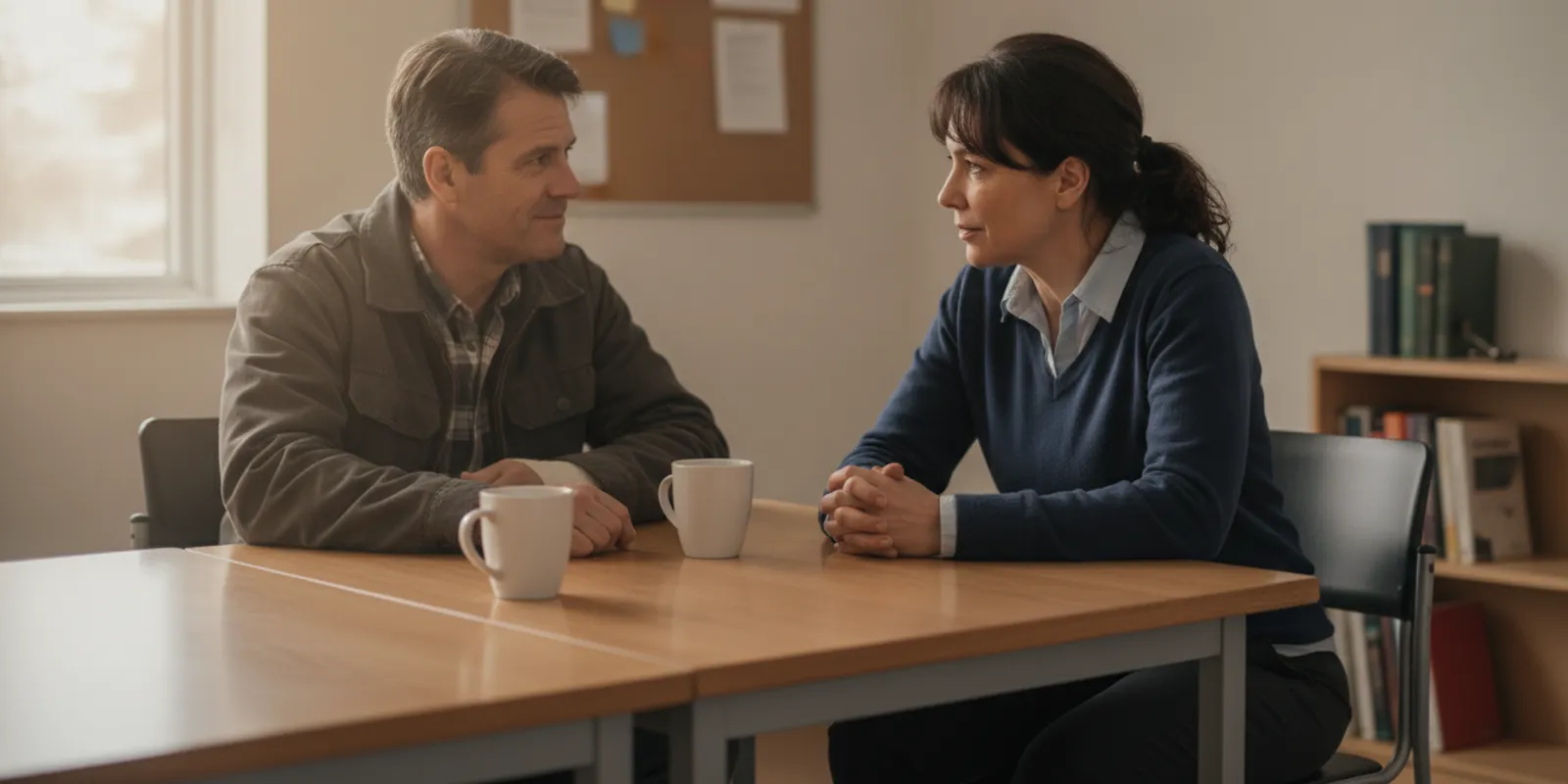
Union Support for Occupational Disease WSIB Claim in Ontario

Union support for occupational disease WSIB claim questions often begins with a member asking whether a health problem could be connected to work. An occupational disease may develop over time after workplace exposure, so the history can be harder to describe than a single accident. A union representative can help the member organize facts, understand next steps, and find specialized guidance without deciding the claim or promising an outcome.
Ask for help with a WSIB claim
What can a union do when a member suspects an occupational disease?
A union can help turn a difficult, long-running story into an organized account of the member’s work and health concerns. It can listen, help identify records and witnesses, and explain available support options. The member remains the person whose claim and choices are at issue; the union should support informed decisions rather than speak for the member without permission.
Start by asking what the member wants from the conversation. They may need help documenting a workplace concern, locating records, speaking with an employer, or understanding a WSIB communication. Do not assume that the member wants the union to contact anyone or share medical information. Ask for clear permission before taking action, and record what the member has authorized.
Occupational disease cases can involve a pattern of work, exposure, symptoms, and treatment over months or years. The union can help the member preserve their own account of that history while avoiding conclusions about medical causation or legal entitlement. Those questions may require input from health professionals and a representative familiar with WSIB matters.
For an overview of the worker-support pathway, see ClaimIt’s WSIB resources and guides. The goal is not to replace professional advice. It is to help the member take a manageable next step with relevant information in hand.
How is an occupational disease concern different from a sudden injury?
A sudden injury is often tied to a specific event and date, while an occupational disease concern may involve repeated or prolonged exposure and symptoms that appear gradually. That difference can make the account more complex to assemble. A clear timeline of work, exposure concerns, symptoms, and care can help the member explain what they experienced and identify questions for qualified professionals.
For example, a member may describe handling a substance, working in a particular environment, or performing a task repeatedly, followed by symptoms that developed or changed over time. This account alone does not establish that work caused a condition. It can, however, help the member and the people reviewing the matter understand what needs to be examined.
The Ontario Bar Association has discussed occupational-disease policy frameworks and the categories used to address occupational disease. Its submission is useful context for understanding why these files may involve policy and evidence questions, rather than a single event description: OBA submission on the WSIB occupational disease policy framework. An Occupational Disease Reform Alliance submission likewise discusses the investigation and adjudication of occupational disease claims; it is a stakeholder perspective, not an individual claim ruling: ODRA submission on occupational disease.
Do not ask a member to diagnose themselves or to prove a medical connection in a union meeting. Instead, note the member’s own description, identify any records that might help clarify the timeline, and refer technical questions to a health professional or a qualified WSIB representative.
What information can a union help the member organize?
Begin with information the member can reasonably access and is comfortable sharing. A useful file does not need to be perfect before the member seeks help. The purpose of organizing is to reduce avoidable confusion, preserve details, and make it easier to ask focused questions—not to create a conclusion about whether a claim will succeed.
- Work history: job titles, duties, work locations, and approximate dates in each role.
- Exposure details: tasks, materials, equipment, conditions, and how often or how long the member recalls encountering them. Keep descriptions factual and flag anything that is uncertain.
- Health timeline: when symptoms first appeared, how they changed, and when the member sought care. The member should rely on their own recollection and health records rather than guess.
- Workplace records: schedules, training materials, safety information, incident or concern reports, and relevant communications, where available and appropriate to access.
- Potential witnesses: people who may be able to describe tasks or conditions. Ask the member before contacting anyone.
- WSIB correspondence: copies of letters, forms, or decisions and any dates or instructions shown in them.

How can a union build a clear timeline without making assumptions?
A simple timeline can show how the member’s work and health concerns unfolded without claiming that one caused the other. Separate what the member remembers, what a document records, and what still needs confirmation. This distinction helps keep the account credible and gives a WSIB representative or health professional a clearer starting point for follow-up questions.
A table or dated list can be enough. The member can add approximate dates when exact ones are unknown and mark those entries clearly. Do not fill gaps by guessing. Ask neutral prompts such as “What task were you doing?” or “When did you first notice the symptom?” instead of suggesting an answer.
| Timeline item | What to record | Possible supporting information |
|---|---|---|
| Work role or task | Job, location, task, frequency, and approximate dates | Schedules, job descriptions, training records |
| Exposure concern | What the member recalls encountering and under what conditions | Safety information, workplace communications, witness recollections |
| Symptoms | What the member noticed and when it began or changed | Personal notes and health records held by the member |
| Care and reports | Appointments, workplace reports, and related communications | Appointment records, copies of reports or letters |
| WSIB contact | Correspondence received, dates shown, and questions still open | Letters, forms, decision documents, notes from calls |
A practical way to build the record is to work in short passes rather than trying to reconstruct everything at once. First, let the member tell the story in their own words without interrupting to correct dates. Next, identify any parts they want to verify, such as a job transfer, a change in duties, or when a symptom became noticeable. Finally, place each available record beside the relevant entry and label its source. For example, “member recalls using the product most shifts” is different from “training sheet lists the product in the work area.” Both may matter as context, but they are not the same kind of evidence.
If the member’s account changes as they remember more, retain a dated note of the clarification instead of silently replacing the earlier note. A respectful process does not treat a memory gap as dishonesty. It shows what is known, what is approximate, and what remains to be checked. The member can then decide whether a representative or health professional should review the information before it is shared.
Request help finding WSIB representation
What should a union representative do when a WSIB letter arrives?
First, help the member identify what the letter says and whether it includes dates, requested information, or instructions. Do not infer a deadline or tell the member that an option is unavailable based on a quick reading. Encourage them to keep the complete letter, note when it arrived, and promptly ask a qualified representative about any time-sensitive question.
Offer practical assistance that respects the member’s choices. You might help them make a list of questions, locate documents they already have, or find a specialist to discuss the letter. If the member wants the union present for a conversation, clarify the role in advance and make sure the member remains central to decisions about their file.
When a letter is unclear, note the exact passage and the question it raises. Avoid paraphrasing it as a definite legal conclusion. WSIB procedures and the effect of a particular decision depend on the individual file, so a union blog or checklist cannot determine what action is right for one person.
Members can explore ClaimIt’s directory of WSIB lawyers and paralegals in Ontario to compare options, or review information about how a WSIB decision appeal works. Each member should choose whether to contact a representative and whom to contact.
How can unions respect privacy and the member’s control?
Occupational disease information can be sensitive. The member should decide what to share, with whom, and for what purpose. A union can explain why a record might be useful, but it should not pressure the member to disclose medical details or circulate documents broadly. Follow the union’s applicable privacy practices and seek guidance if a question arises about handling information.
Practical safeguards include:
- Ask for permission before contacting the employer, a witness, WSIB, or a representative on the member’s behalf.
- Agree on what information can be shared and with whom; do not treat permission for one conversation as permission for every later use.
- Keep a record of what the member asked the union to do and any limits they set.
- Store documents in an appropriate secure location and restrict access to people who need them for the agreed support.
- Return or dispose of copies according to the union’s policies and the member’s instructions.
It can help to agree on a narrow purpose before gathering or sharing a document. For instance, the member might authorize a steward to help locate a schedule but not to send health records to an employer or coworker. Confirm who will keep any copy, how it will be sent, and whether the member wants to review the message first. If a record contains other people’s personal information, do not assume that the member’s permission alone resolves every access or disclosure question. Follow the union’s established process and seek advice where needed.
When should a member consider speaking with a WSIB lawyer or paralegal?
A member may want specialized help when they are unsure how to describe a possible workplace connection, have received a decision or request they do not understand, or need to discuss options for their individual circumstances. A conversation with a WSIB lawyer or paralegal can help the member ask informed questions. It does not guarantee a particular result, and the union should not make that promise.
Union representatives can make the introduction easier by helping the member prepare a concise summary and a list of questions. For example, the member may want to ask:
- What information would help you understand my work and health timeline?
- What does this WSIB letter ask me to do, and are there dates I should verify?
- What records should I gather, and what should I avoid sharing until I understand why it is needed?
- How will you explain my options and the next steps for my specific file?
- Who will communicate with me, and how should I send documents securely?

When helping a member compare possible representatives, keep the choice with the worker. A union can point to a directory and encourage the member to ask about relevant experience, communication, and how the representative would approach the specific file. It should not present one person as guaranteed to secure benefits or imply that a particular outcome is assured. If the member prefers to make contact independently, offer the links and let them proceed at their own pace.
A short preparation note can make an initial conversation easier: the member’s main concern, the key dates they remember, any WSIB letter they want explained, and the questions they most want answered. The note should be a starting point, not a polished argument. A lawyer or paralegal can tell the member what additional details or records would be useful after learning more about the circumstances.
What can union representatives say—and what should they avoid?
Helpful support is accurate, calm, and clear about its limits. Representatives can listen, help preserve the member’s account, point to relevant records, and help locate specialized support. They should avoid diagnosing a condition, predicting how WSIB will decide, or telling a member to take or skip a step without understanding the file and getting appropriate guidance.
| Helpful approach | Avoid | Why it matters |
|---|---|---|
| “Let’s write down what you remember and what records you have.” | “This proves your condition came from work.” | A timeline can organize facts, but medical and claim questions need proper assessment. |
| “Let’s check the letter and identify what you want to ask.” | “You definitely have plenty of time.” | Any time-sensitive issue should be checked against the actual document and qualified guidance. |
| “Would you like help finding a WSIB specialist?” | “You must use this particular representative.” | The member should control whether and whom they contact. |
| “I can help organize records you choose to share.” | Sharing health details without permission. | Consent and privacy are important throughout the process. |
One useful practice is to prepare neutral language for common questions. A representative might say, “I can help you collect the dates and documents you choose to share, and we can identify what you want to ask a specialist.” That keeps the conversation useful without turning a union discussion into a diagnosis or legal assessment. If a member asks for a prediction, explain that you cannot determine the result from a short conversation and help them find someone qualified to review the full facts.
Help a member find WSIB legal support
Frequently asked questions
Union representatives do not need to resolve every question before helping. They can support a member by keeping the account factual, preserving relevant information, respecting privacy, and helping the member reach an appropriate professional. These answers offer general orientation only; the individual file and current WSIB communications matter.
Can a union file or decide an occupational disease claim for a member?
A union can support a member, but it should not assume authority to act or share information without the member’s permission. The member should confirm who is handling the claim and seek qualified guidance about any filing or decision question.
What if the member cannot identify one exact exposure date?
For a concern that developed over time, the member can write down the period, tasks, locations, and details they do recall, marking estimates as estimates. Do not invent exact dates. A qualified professional can advise what information is relevant to the particular matter.
Should the union contact coworkers who may have seen the conditions?
Only after discussing the idea with the member and obtaining appropriate permission. The member’s wishes, workplace context, and privacy considerations should guide any contact. Keep witness information factual and do not coach anyone on what to say.
Does organizing a timeline prove a disease is work-related?
No. A timeline can make the member’s account easier to review, but it does not establish medical causation or determine a WSIB claim. Questions about diagnosis, evidence, and the effect of a particular record belong with qualified professionals.
Where can an Ontario worker look for specialized WSIB help?
The member may review ClaimIt’s Ontario WSIB representative directory and decide whether to contact a lawyer or paralegal. They can also use the worker intake form to request help. The member controls whether to proceed.
Help a member take the next step toward WSIB support
Thoughtful union support can help a member feel less alone while they organize the facts and decide what guidance to seek next.
Need Help With Your WSIB Claim?
Connect with a verified WSIB lawyer or paralegal in Ontario. Most offer free consultations and work on contingency.
Find a Representative